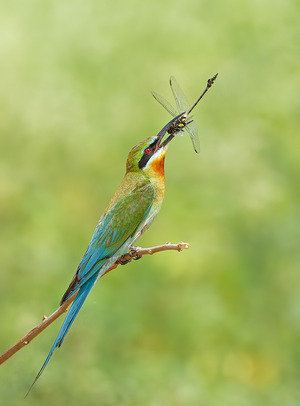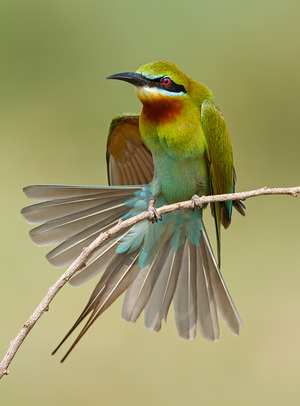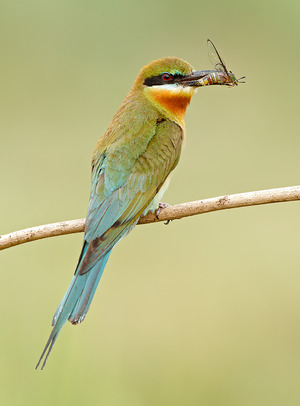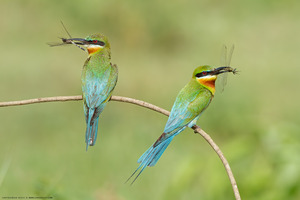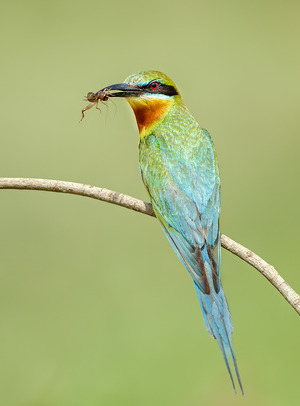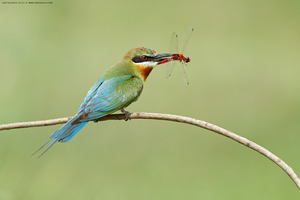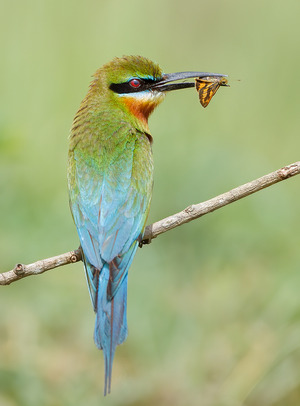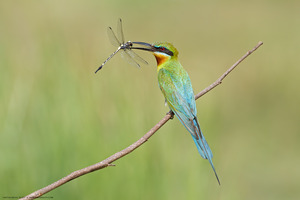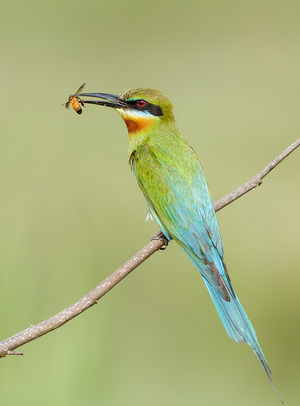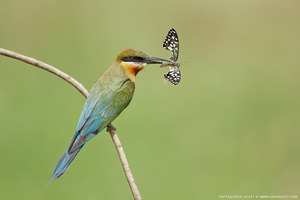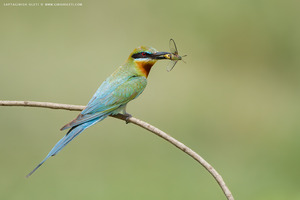
The blue-tailed bee-eater is, for me, a bird of early mornings on the Cauvery. I have photographed them along the sandy banks of the river near Mysore, where they are at their most active soon after first light — slim, elegant birds in green and blue, dropping off a perch to hunt and returning a moment later with something in the beak.
What I love about them is the sheer variety of what they catch. Across these mornings I have watched them bring back bees, dragonflies of every colour, butterflies and moths — a different meal almost every time. Most of the hunting happens on the wing, and it is full of acrobatics: sharp turns, mid-air twists and sudden stalls as they run down a fast insect, before gliding back to a favourite perch to deal with it. A bee-eater will often beat and rub its catch against the branch — working the sting out of a bee — before swallowing it.
Those sandy banks are not just a hunting ground; they are home. Bee-eaters dig their nesting tunnels straight into the river banks, which is part of why the same stretch of the Cauvery stays reliable year after year. Common, colourful and always busy, they are exactly the kind of bird that rewards an early start and a little patience by the perch.