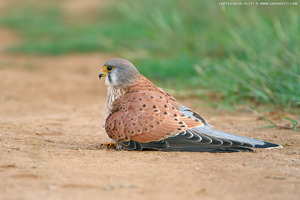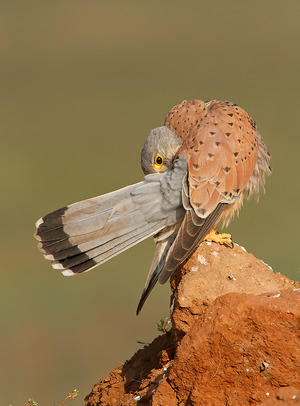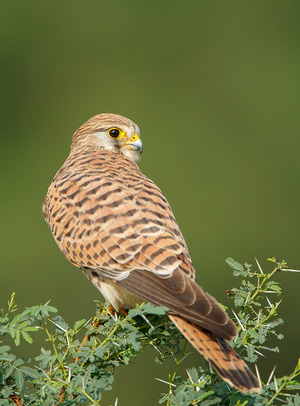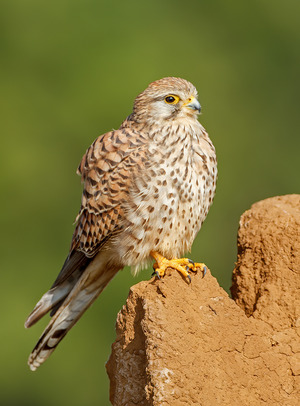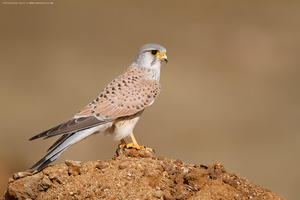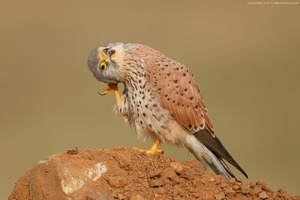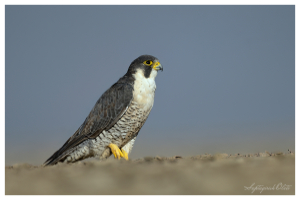
The common kestrel is one of the birds I have practised my photography on more than almost any other. Most of my images come from the grasslands and dry lake beds around Bangalore, where these small falcons arrive for the winter — and unlike the wary kestrels I have met elsewhere, the ones that visit Bangalore are remarkably bold and cooperative, happy to let a photographer settle in close.
Early mornings are the best time. I find them on rocks, low bushes and termite mounds, often preening for long stretches, which gives me the chance to watch and photograph them in all their moods — alert, relaxed, stretching, fanning out their tail feathers in the first light. When they do hunt it is a treat to watch: a kestrel will hang almost motionless in the air, head held dead still, scanning the ground below before dropping onto its prey.
Because they are approachable and endlessly expressive, kestrels have taught me a great deal — about light, about patience, about waiting for a bird to do something rather than chasing it. They are proof, again, that some of the best lessons come from common birds close to home.