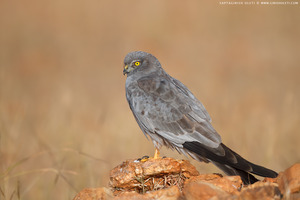
The Montagu's Harrier (Circus pygargus) is one of the birds I most associate with India's open grasslands in winter. Slender and long-winged, it hunts the way harriers do — quartering low and slow over the grass, tilting on raised wings, then dropping without warning onto a lark, a rodent or a large insect hidden below.
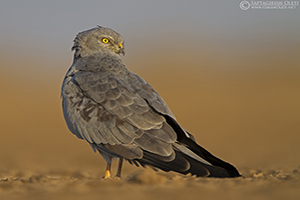
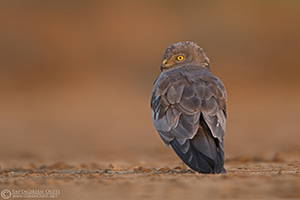
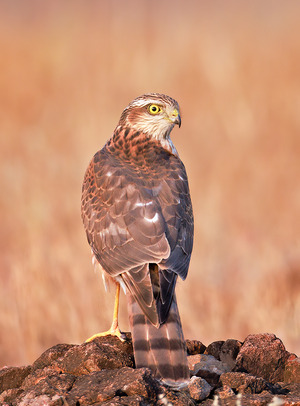
I have photographed them across several of these grassland landscapes: the salt flats and scrub of the Little Rann of Kutch, the short-grass plains of Tal Chhapar in Rajasthan, the blackbuck country at Maidenahalli in Karnataka, and open patches closer to home around Bangalore. Over these visits I have been fortunate to see all of its plumages — the pale grey male with his black wingtips and wing-bar, the brown, streaked female, and the rufous juvenile — each asking for a slightly different eye in the field.
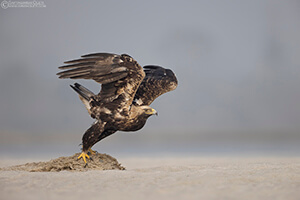
What stays with me is less any single frame than the rhythm of watching them: long stretches of empty horizon, then a distant grey shape working steadily closer. One evening in the Little Rann, a male settled on the ground in low golden light and simply rested — a quieter picture than the hunting passes, and one of my favourites. Like all harriers, they gather to roost on the ground in these grasslands, which makes the last hour of light both the best time to photograph them and the most important time to keep a respectful distance.