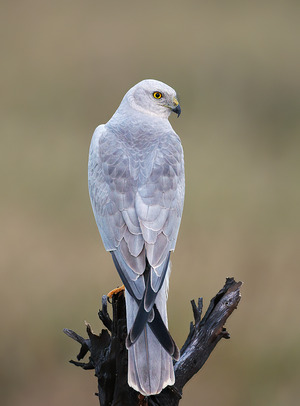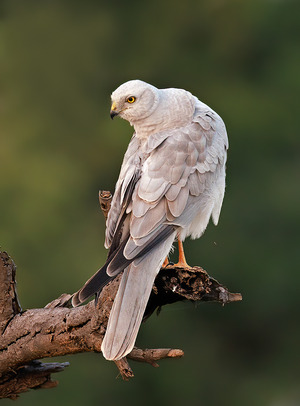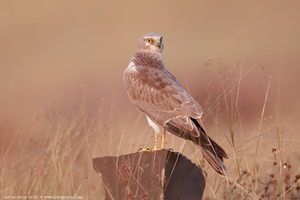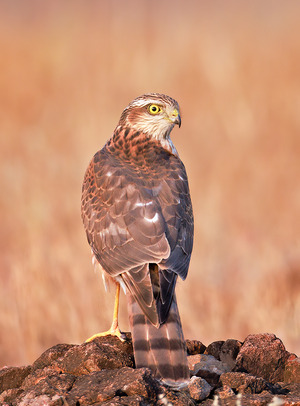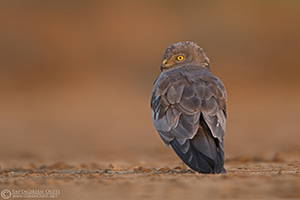
The pallid harrier is the ghost of the grasslands. The adult male is so pale — a soft, silvery grey fading almost to white, marked only by a narrow black wedge at the wingtip — that he can seem to glow against a winter field, there one moment and gone the next.
I have photographed them across the open country they favour in winter: the short-grass plains of Tal Chhapar in Rajasthan, the grasslands of Maidenahalli in Karnataka, and the scrub and field edges around Bhigwan in Maharashtra, where I finally caught the pale males quartering low into the light. The brown females and young birds — the "ringtails" — are far harder, easily confused with other harriers, and separating them is part of both the pleasure and the frustration.
A long-distance migrant that crosses continents to spend the cold months on our grasslands, the pallid harrier ties these scattered open places together for me. Like all harriers it hunts low and roosts on the ground, and the last hour of light is both the best time to photograph one and the moment to hold back and let it settle undisturbed.